
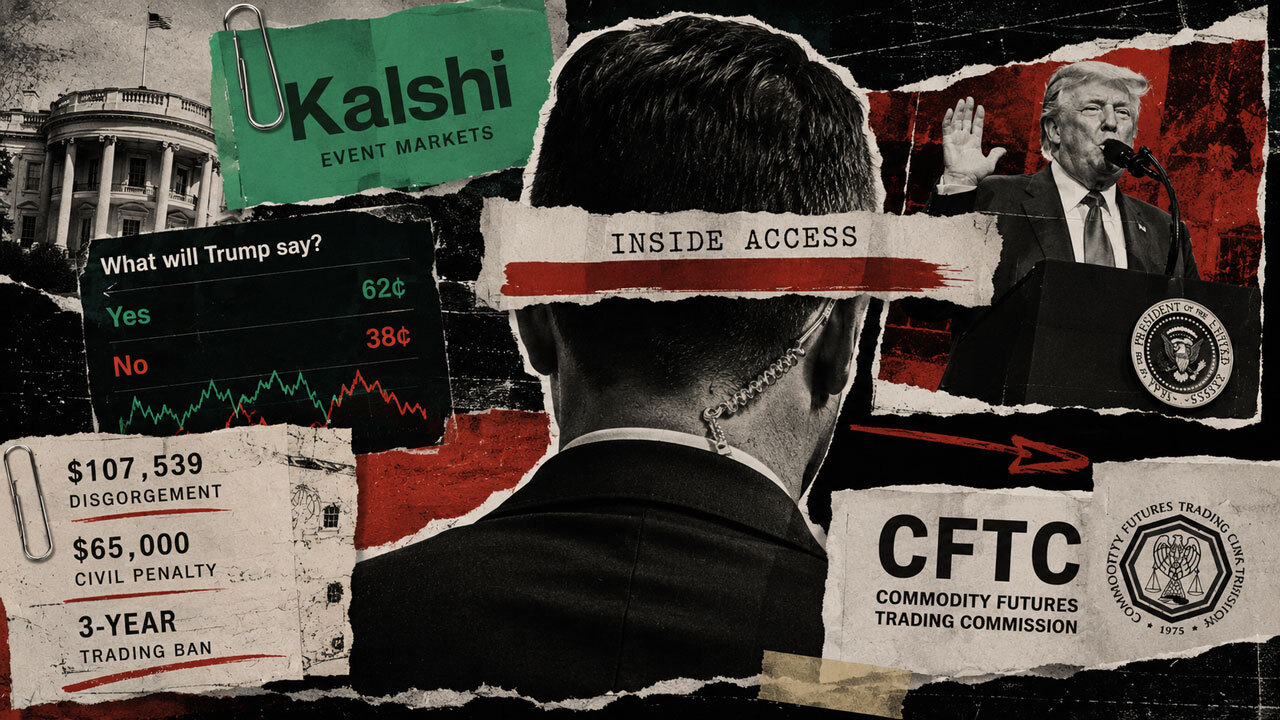
A White House speech insider who worked as a teleprompter operator must surrender $107,539.02 in prediction-market profits after the Commodity Futures Trading Commission found that he traded on advance access to presidential speeches.
The settled administrative order also requires Gabriel Perez to pay a $65,000 civil monetary penalty, cease and desist from further violations and accept a three-year trading ban. The CFTC said the penalty was substantially reduced because of Perez’s exemplary cooperation. The cited materials describe a civil regulatory settlement and do not report a criminal conviction.
How the White House speech insider gained a trading edge
The CFTC found that Perez traded presidential “mention market” contracts between December 2025 and February 2026 while working as a White House teleprompter operator. The event contracts, which the regulator describes as swaps, settled on whether the President would use particular words or phrases during speeches.
Perez saw the speeches before they were delivered, according to the order. The CFTC said he misappropriated that material nonpublic information in breach of a duty of trust and confidence, converting knowledge of the prepared text into more than $107,500 in profit.
Other traders were pricing the probability that a phrase would be spoken. Perez already had access to text that would help determine the outcome, giving him an information advantage built into the contract’s settlement question.
The CFTC release announces settled charges against Perez and separately says the agency appreciated KalshiEX’s assistance. It does not announce charges against the exchange or say the agency found a surveillance failure.
The Associated Press reported in July that Kalshi enforcement head Robert DeNault said the exchange’s surveillance team “promptly flagged, investigated and referred” the trades to the CFTC. AP noted that his public statement did not name Perez. The CFTC’s final release confirms assistance but does not disclose the detailed timing of Kalshi’s review or referral.
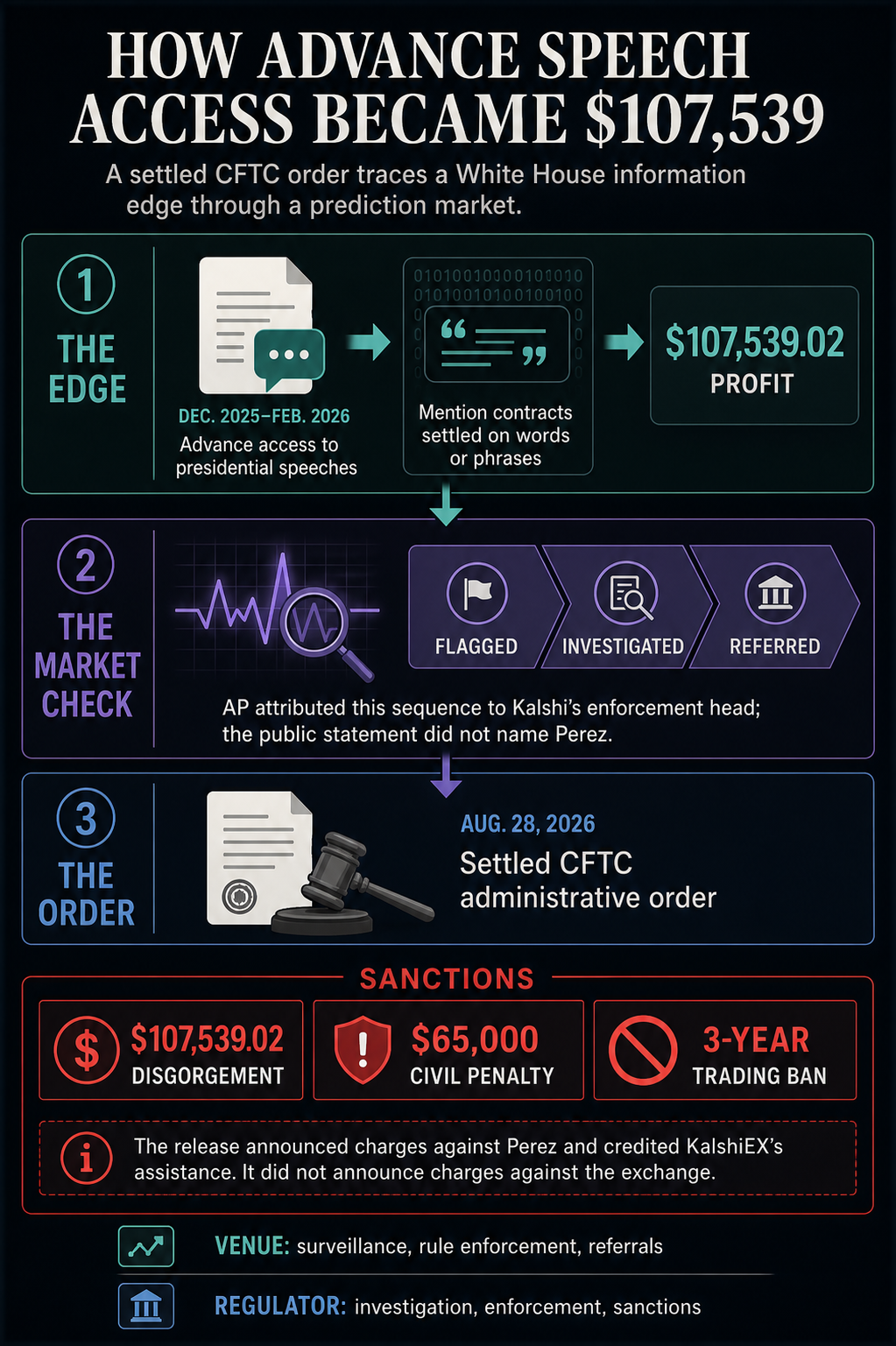
That record reflects two distinct policing roles. A February CFTC advisory says designated contract markets have an independent duty to maintain audit trails, conduct surveillance and enforce rules against prohibited practices. The CFTC retains authority to investigate and prosecute illegal trading and says it coordinates with exchanges on referrals.
Kalshi later added controls intended to move some policing ahead of the trade. In June, the exchange announced risk scoring for markets with heightened insider or manipulation risk, employment verification for some participants and expanded whistleblower tools. Those measures came after Perez’s December-to-February trading period, and the available sources do not establish whether they would have blocked his activity.
The settlement shows exchange referral and regulatory enforcement converging after the profits were made: Kalshi was credited with assistance, and the CFTC imposed disgorgement, a penalty and a market ban. It does not, by itself, show that the safeguards were timely or sufficient to prevent the trades.
The post White House aide turned secret speech text into $107k on prediction markets before CFTC stepped in appeared first on CryptoSlate.