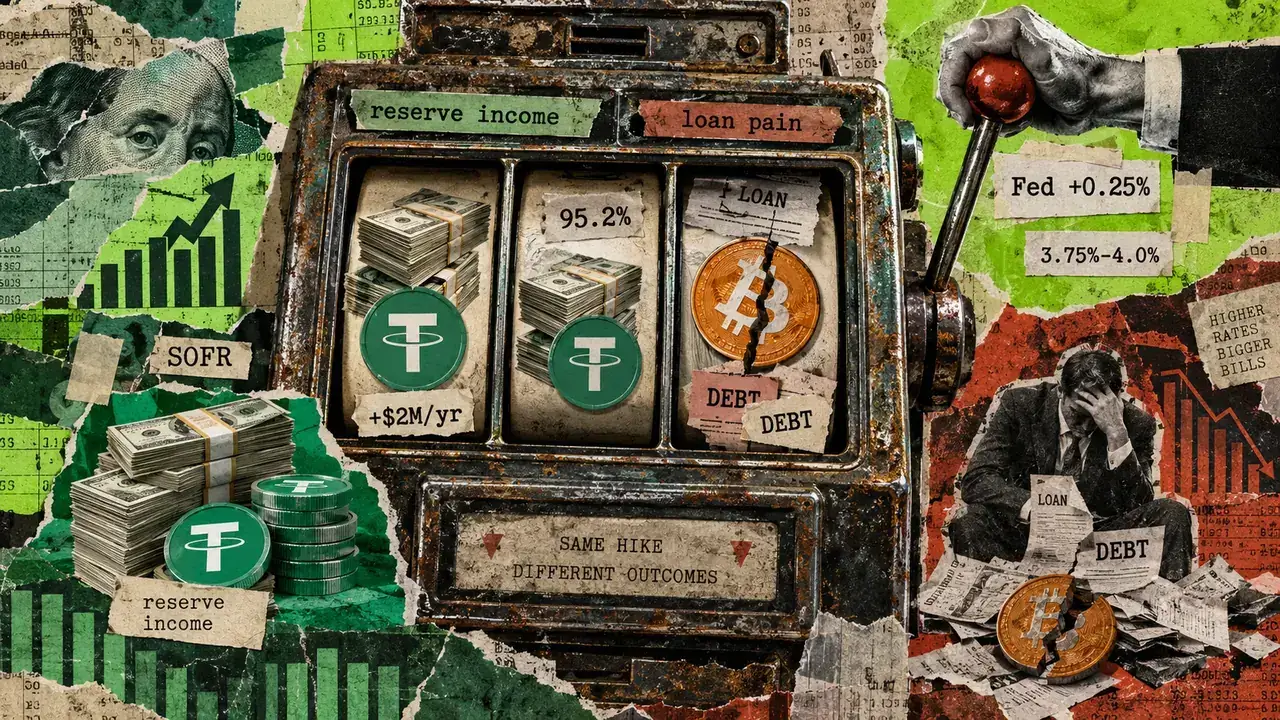
US government debt is one of the easiest assets in the world to borrow against, which lets financial companies get cash without giving up their investments for good.
Washington is rewriting the rules for that borrowing, and the result will reach crypto through the companies that keep Treasury securities behind their dollar tokens.
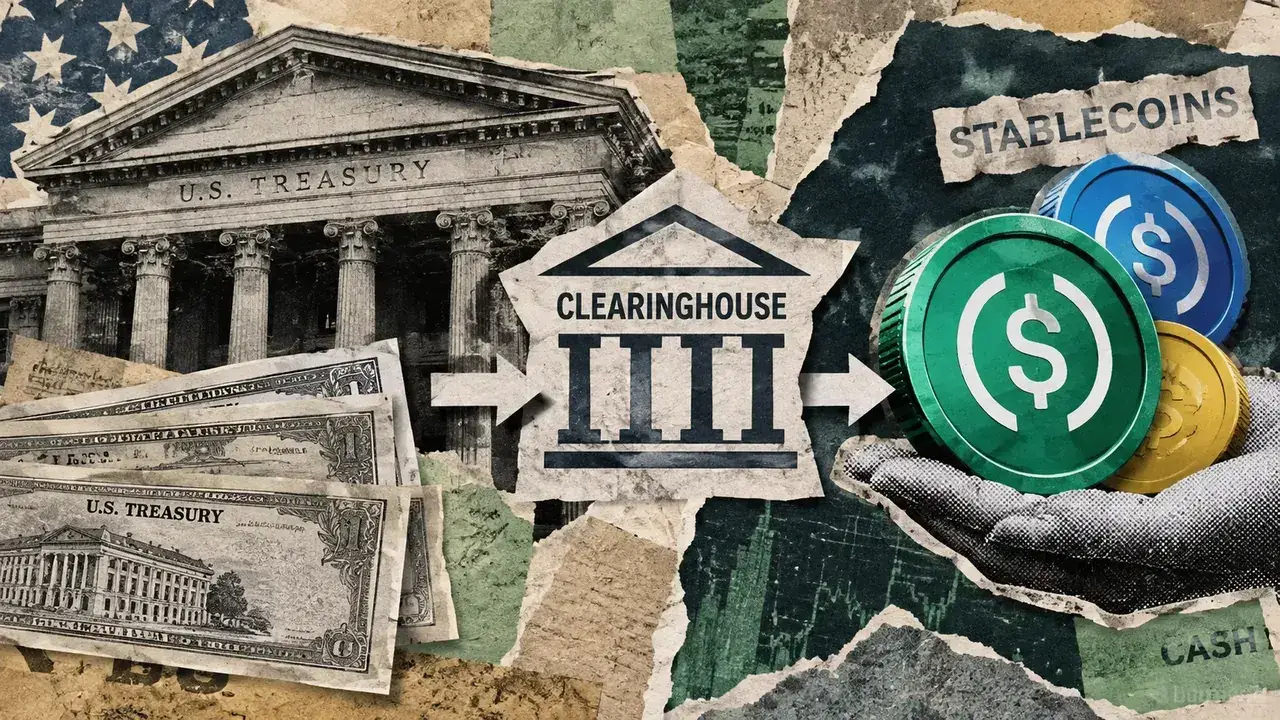
The SEC wants more Treasury transactions to pass through a central clearinghouse, an institution that becomes the buyer to each seller and the seller to each buyer.
If one trading company fails, the other side can look to the clearinghouse to complete the covered trade, under its rules, instead of trying to recover everything from the failed company itself.
Providing that kind of protection takes a lot of money, so the new system will also affect what companies pay to trade and borrow. Stablecoin issuers depend on those services when they need to convert reserve assets into dollars for customers, so the cost and availability of Treasury trading affect how well their tokens work.
The SEC's deadlines are Dec. 31 for eligible outright purchases and sales of Treasuries, followed by June 30, 2027, for eligible repurchase agreements, known as repos. Commissioner Mark Uyeda said on Sept. 22 that the agency didn't currently intend to extend them.
These requirements cover specified trades involving clearing members, rather than every purchase of a Treasury by anyone who owns one.
Owning the Treasury bond is only half the transaction
Suppose an investment fund owns Treasury securities but needs dollars today, before the government is due to repay it. The fund could sell some of those securities, or it could use a repo: sell them now with an agreement to buy them back on a set date, often the next day, for a slightly higher price.
Economically speaking, the fund has borrowed cash, with the Treasuries protecting the lender and the price difference paying for the loan. The borrower gets money it can spend while keeping a road back to its securities, and the lender earns a return on cash it wasn't using.
Dealers, usually banks or securities firms, connect much of this business. The New York Fed's explanation of the repo market follows cash from lenders such as money-market funds through dealers to borrowers such as hedge funds.
Dealers can borrow in one part of the market and lend in another, earning money for arranging and financing the transactions.
The scale is enormous: activity used to calculate the Secured Overnight Financing Rate, or SOFR, went from about $1 trillion in early 2022 to roughly $3 trillion, according to the Fed research.
SOFR measures the cost of overnight borrowing against Treasuries, and those volumes cover the transactions feeding that benchmark, rather than the whole repo market.
But even with that much money moving around, an individual customer can struggle to borrow on good terms. Dealers have limits on how much business they can carry, partly because their trades use capital and count toward regulatory constraints.
Plenty of available cash elsewhere in the market doesn't help much if the firm connecting you to it has reached its limit.
Central clearing can reduce some of that burden through netting, which means recognizing offsetting amounts. In a simplified example, a dealer owes $100 and is due to receive $95 on the same settlement date.
If both obligations qualify for netting through the same clearinghouse, the cash payment can be reduced to $5.
Real Treasury trades also involve securities deliveries, and the legal agreements determine which obligations can be combined. But the basic benefit is straightforward: companies can need less money to complete offsetting trades, and qualifying netting can also reduce the balance-sheet resources those trades consume.
That could let a dealer serve more customers with the resources it already has. Whether customers get cheaper borrowing depends on how much the dealer saves and how much of that saving it passes on, after accounting for clearing costs.
Someone still has to bring the collateral
The clearinghouse can promise to complete trades because it collects financial resources and has procedures for dealing with a member that can't pay. International standards for clearinghouses require them to manage the exposures they take on and hold resources they can use during stress.
One part of that protection is margin, meaning cash or eligible securities posted against a position. If a company defaults and its trades cost money to close, that collateral helps cover the bill.
Until then, the company must keep it available, even if it would prefer to put the money to work elsewhere.
This is where a safer transaction can become a more demanding one for its participants. Being able to afford a trade over its full life doesn't mean a company has the right collateral ready when it's due, especially when several obligations need funding at once.
Many customers also need another company to get them into the system. The Fixed Income Clearing Corporation, or FICC, operates a Sponsored Service in which an approved sponsoring member handles operational duties and guarantees specified obligations for its customers.
That sponsor takes on work and risk, which can affect the terms it offers.
FICC's Collateral-in-Lieu service for eligible cash lenders uses protections involving the Treasury collateral in the transaction so those lenders don't have to post initial margin under that model. The arrangement shows why being required to use a clearinghouse doesn't automatically mean every participant must find the same amount of extra cash.
Customers still need to compare the full price of access, including the fee they pay a provider and the cost of keeping collateral available.
Savings from netting can make one part of the transaction cheaper while the new service adds expenses elsewhere, so the final bill depends on the arrangement the customer can obtain.
DTCC's July survey of FICC members gives us plenty of good reasons to watch that choice of providers. While 79% of responding netting members already had the necessary account setups, only about a third expected to offer Treasury cash clearing to their clients.
Those numbers just describe the survey respondents, and they don't prove customers will be shut out. But they do show why a dealer being ready to comply isn't the same as that dealer being willing to take on your business.
If customers have few providers to choose from, providers have less reason to compete away the savings that clearing can produce.
Digital dollars inherit the operating hours
Issuers of dollar-linked stablecoins can keep part of their backing in short-term Treasuries because those securities earn income and have a large resale market. But when an eligible customer redeems tokens, the issuer owes dollars, so it needs cash on hand or a reliable way to obtain it from its reserves.
That's a different arrangement from a bank putting an existing deposit on a blockchain. Tokenized deposits and the money behind bank lending explain how those products preserve the customer's claim on the bank.
With a Treasury-backed stablecoin, the issuer's reserve management and banking relationships determine whether it can meet the redemption terms it offers.
The connection to clearing runs through those relationships, whether the issuer trades directly or uses a fund manager and other intermediaries.
If its providers can sell or finance Treasuries more efficiently, managing redemptions could become easier or cheaper. If access becomes more expensive, the issuer may face higher reserve-management costs, although that doesn't automatically mean customers pay a new fee.
Nor does central clearing make the reserve market operate around the clock. You can send a token on Sunday while the issuer's banks and securities providers work on different hours, and sending that token to another person is different from asking the issuer to pay dollars into a bank account.
The issuer has to plan for that gap through its cash holdings and the redemption terms it promises.
Keeping more cash readily available can help meet withdrawals, but it may earn less than other permitted reserve investments. Relying more heavily on selling or financing securities can preserve flexibility elsewhere, but it makes dependable access to those services more important.
Each issuer has to choose an arrangement it can actually operate when customers want their money back.
The overhaul could improve that access by making dealers' resources go further and giving trading partners a common process when a firm fails. It could also leave some customers dependent on a small number of providers, especially if opening a replacement account takes time.
Both outcomes can exist in the same market, with larger customers getting better terms than smaller ones.
That makes the price of access and the ability to switch providers worth watching as the deadlines approach.
Treasury-backed tokens depend on people who can turn securities into a payment, and the benefit of Washington's new rules will reach their holders only if that job becomes more dependable at a cost the issuer can support.
The post New Treasury rules could change how stablecoin issuers get your dollars back appeared first on CryptoSlate.