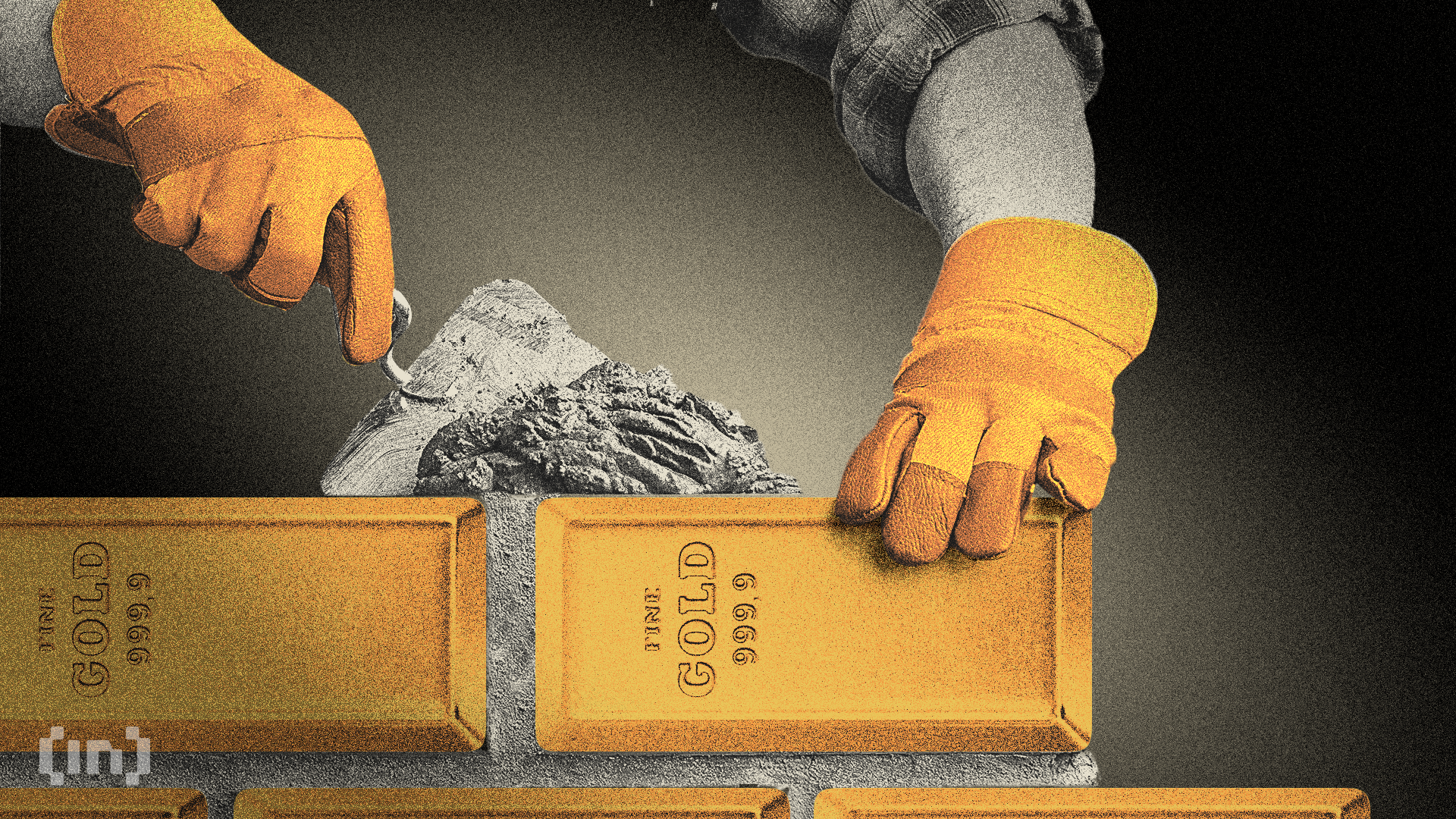

Economist Nouriel Roubini has declared the “death of the petrodollar” and backed a new tokenized reserve asset called ‘Technodollar’ tied to US productive assets, marking his first formal move into digital assets after years as one of crypto’s most prominent critics.
Speaking on the Expert Council podcast this week, Roubini said stablecoins fail to protect investors from the same inflation and debasement risks that affect traditional fiat currencies.
He argued that the next reserve asset should be linked to technology, artificial intelligence, defense, semiconductors, and other parts of the US economy.
The comments came as Atlas Capital Team launched USAFi, a tokenized reserve asset issued in Dubai under the Virtual Assets Regulatory Authority’s Asset-Referenced Virtual Asset framework.
Atlas says USAFi introduces a new category of regulated digital reserve infrastructure. The token is structured as a permissionless ERC-20 asset and is directly collateralized by the Atlas America Fund, an SEC-registered, actively managed ETF listed on Nasdaq under the ticker USAF.
The Illusion of On-Chain Safety
For years, crypto investors have treated dollar-pegged stablecoins such as USDT and USDC as safe places to park capital during market stress.
Roubini said that view misses a larger problem. Stablecoins may help with payments, but they still track a fiat currency that can lose purchasing power during inflationary periods.
“Stablecoins are going to be useful as a means of payment… but if the critique of cryptocurrency was the risk of debasement that comes from inflation, then something that is not interest bearing, like a stablecoin, just a digital dollar with zero interest rate, is subject to the same kind of a debasement risk as a fiat,” Roubini said. “Stablecoins are a very imperfect way of providing this hedging. Highly imperfect is essentially a digital version of the fiat currency with all the problems of fiat currencies.”
His argument is simple. A token that only tracks the dollar does not solve the dollar’s weakness. It moves that weakness onto the blockchain.
That matters more in an economy facing persistent inflation, geopolitical shocks, and climate-related risks. In that environment, Roubini argues that investors need exposure to assets that can preserve real value, rather than digital cash that earns no yield.
From Petrodollars to Technodollars
Atlas framed USAFi around a larger shift in the global reserve system.
In a whitepaper published alongside the launch, the firm said the world has moved from the gold standard of 1944 to 1971, then to the energy-backed petrodollar from the 1970s onward. It now sees a new phase built around what it calls the “technodollar.”
The thesis is that US economic power is increasingly driven by technology rather than oil. Atlas says a reserve asset backed by AI-linked equities, semiconductors, defense technology, cyber infrastructure, short-duration Treasuries, gold, and climate-resilient real estate offers a better hedge for the modern economy.
USAFi’s collateral comes through the Atlas America Fund, which is custodied at BNY Mellon. Atlas says the fund uses machine learning to manage risk across its portfolio.
“The machines do the homework and the people on the investment committee, which Nouriel chairs, make the call,” said Reza Bundy, Atlas Capital CEO and Chairman.
Bringing the Asset On-Chain
Atlas partnered with Securitize to bring the asset onto public blockchains. Securitize is the tokenization platform behind several institutional real-world asset products, including BlackRock’s tokenized fund infrastructure.
The goal is to make USAFi usable as on-chain collateral, rather than keeping it inside a closed institutional environment.
“We think that the tokenized version of it could actually be a very good fit as working as a reserve asset for DeFi collateral,” said Carlos Domingo, founder and CEO of Securitize.
The launch also reflects a broader shift in real-world asset tokenization. Tokenized Treasuries and money market products have already gained traction, but Atlas is pitching USAFi as a more adaptive reserve asset for periods of inflation and macro stress.
For Roubini, the core point is that digital assets cannot rely only on fiat replicas. If investors want protection from debasement, he argues, the collateral itself must change.
USAFi is his first major test of that idea.
The post The Death of the Petrodollar: Nouriel Roubini Outlines Shift to AI-Backed ‘Technodollars’ appeared first on BeInCrypto.