While Bitcoin mining often dominates headlines, many miners today operate across multiple algorithms. Two of the most important ecosystems in proof-of-work mining are SHA-256 and Scrypt — each with its own hardware requirements, economics, and strategic considerations.
For new miners, the difference between these algorithms can be confusing. For experienced operators, understanding their cost structures and risk profiles is essential for building a resilient mining strategy.
Let’s break down how SHA-256 and Scrypt mining compare in 2026.
Understanding the Algorithms
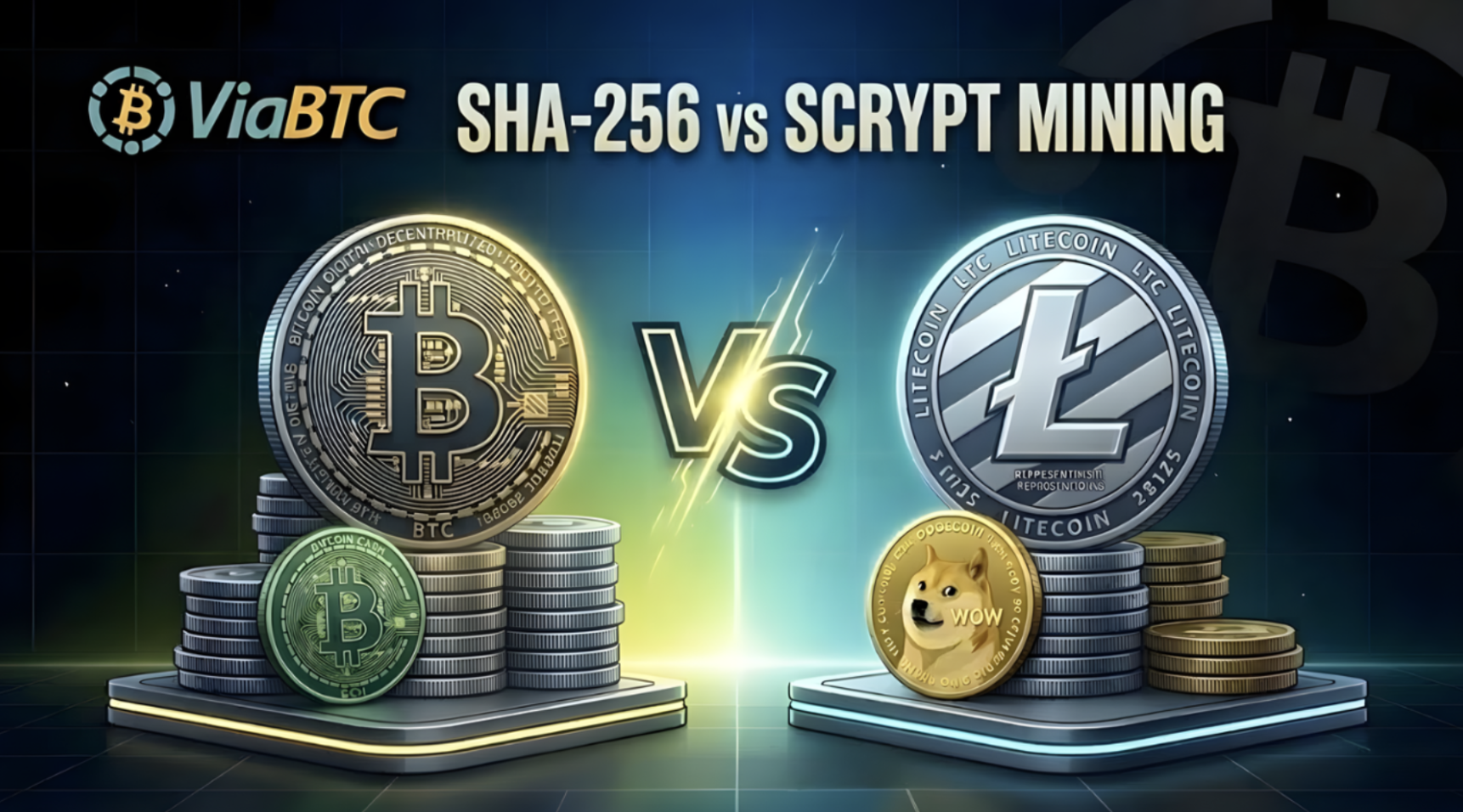
At the technical level, both SHA-256 and Scrypt are cryptographic hashing algorithms used to secure blockchains.
- SHA-256 powers Bitcoin and several related networks.
- Scrypt powers Litecoin and Dogecoin, among others.
While they both rely on specialized ASIC hardware today, they were originally designed with different goals in mind. Scrypt was initially intended to be more memory-intensive, while SHA-256 was optimized for computational hashing.
Over time, both ecosystems evolved into fully industrialized mining sectors.
Hardware Differences
The most visible difference between the two ecosystems is hardware specialization.
SHA-256 miners typically (but not exclusively) focus on machines designed exclusively for Bitcoin (and derivative) mining. These ASICs prioritize raw hashing power and energy efficiency.
Scrypt miners, on the other hand, often support merged mining — meaning a single machine can contribute to multiple networks simultaneously.
For many miners, this distinction affects not only profitability but also flexibility.
Revenue Structure
Another key difference lies in how rewards are generated.
SHA-256 mining relies primarily on:
- Block rewards
- Transaction fees from the Bitcoin network
Scrypt mining often benefits from merged mining, allowing miners to earn rewards from multiple chains without additional energy consumption.
This dual-reward structure can make Scrypt mining particularly attractive during certain market cycles.
Risk Profiles
Each algorithm ecosystem carries its own risk profile.
SHA-256 mining tends to offer:
- The strongest network security
- The largest market capitalization
- High competition and rising difficulty
Scrypt mining can offer:
- Multi-chain reward exposure
- Different difficulty dynamics
- Potential diversification benefits
Neither approach is inherently better. Instead, miners often choose based on their risk tolerance and operational goals.
Beyond hardware, SHA-256 and Scrypt mining often differ in how operating costs scale.
SHA-256 mining is typically characterized by:
- Large industrial farms
- High total power consumption
- Very competitive hashrate markets
- Tight margins driven by difficulty
Because Bitcoin mining dominates the SHA-256 ecosystem, profitability is heavily influenced by electricity cost per terahash.
Scrypt mining, on the other hand, often benefits from merged mining rewards and slightly different difficulty dynamics. This can create scenarios where miners earn rewards from multiple networks without increasing energy consumption.
For some operators, this results in a different cost-to-revenue balance compared to SHA-256 mining alone.
Operational Strategy: Diversification vs Focus
Professional mining operations often take one of two approaches:
Focused strategy
- All hardware dedicated to a single algorithm
- Simpler management
- Strong alignment with one network
Diversified strategy
- Exposure to multiple algorithms
- Potentially smoother revenue streams
- Greater flexibility during market changes
Many miners find that diversification across SHA-256 and Scrypt can reduce risk during volatile market cycles.
The Role of Mining Pools
Regardless of the algorithm, mining pools remain critical to profitability.
Pools provide:
- Lower variance in payouts
- Infrastructure stability
- Monitoring tools and analytics
- Efficient reward distribution
Without a reliable pool, even the most efficient hardware can underperform.
Why Many Miners Choose ViaBTC
This is where ViaBTC offers a distinct advantage.
ViaBTC supports both SHA-256 and Scrypt mining, allowing miners to operate across multiple ecosystems without juggling different platforms. This makes it easier to:
- Manage operations in one dashboard
- Monitor performance across algorithms
- Adjust strategies as market conditions change
For miners running diverse hardware fleets, that operational simplicity can be a major advantage.
Mine Smarter Across Algorithms
Whether you’re focused on Bitcoin or exploring the benefits of Scrypt mining, choosing the right infrastructure partner is just as important as choosing the right hardware.
Mine with ViaBTC and manage both SHA-256 and Scrypt operations through a single reliable platform.
The post SHA-256 vs Scrypt Mining: Cost Profiles, Risk, and Long-Term Strategy appeared first on BeInCrypto.