
Ethereum has been trading sideways for weeks, unable to generate meaningful upside despite elevated network activity. Price action remains compressed, caught between stubborn resistance and fragile support.
Beneath the surface, however, a striking divergence between usage and price performance reveals a more complex and concerning story for ETH holders.
Ethereum Reaches Highs But Fails To Retain It
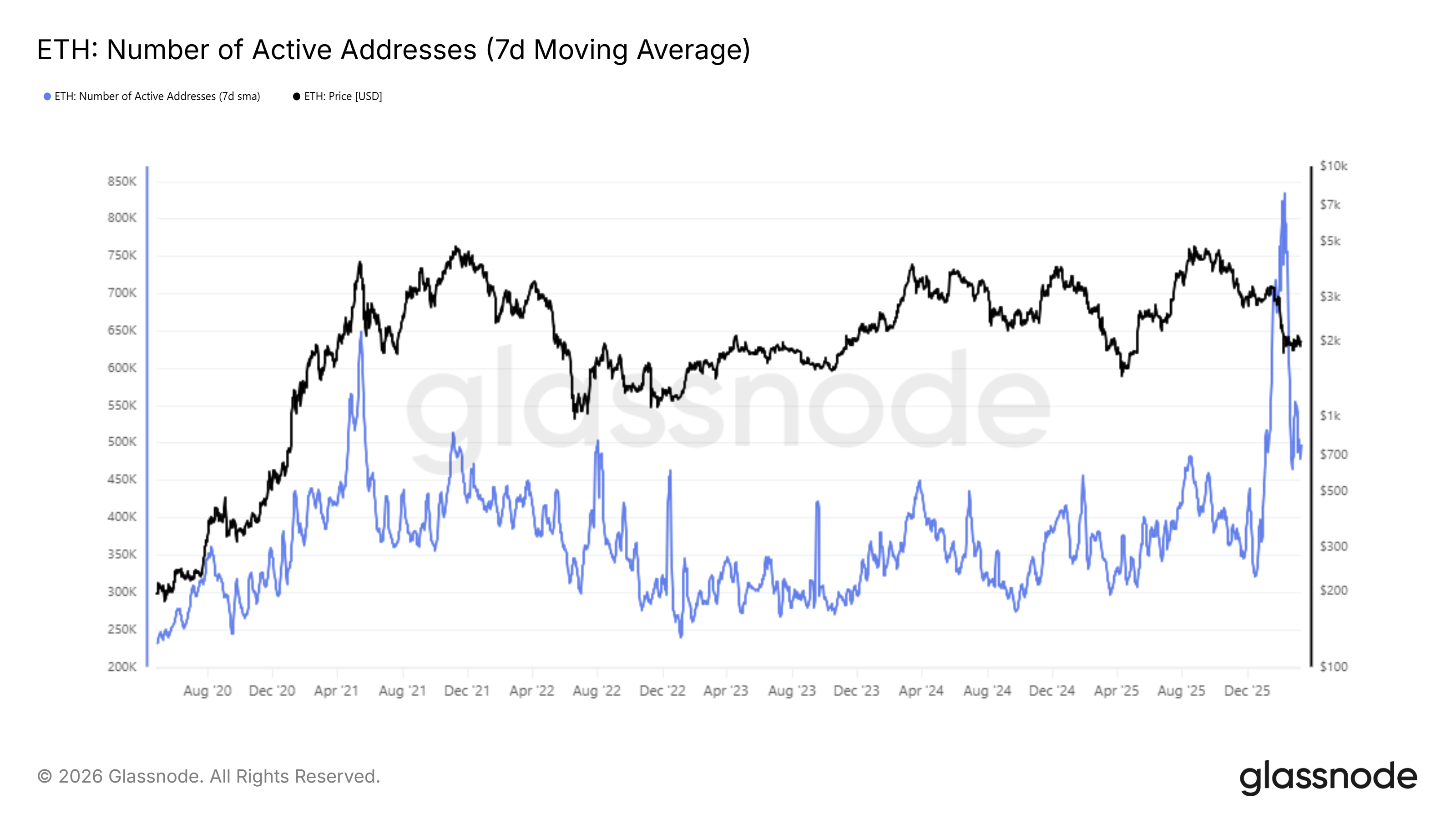
Ethereum’s network activity reached historic levels earlier this year. Active addresses peaked at 836,000 in early February, surpassing the previous record of 644,000 set during the 2021 bull market. This milestone confirmed that participation in the current cycle exceeded even the most euphoric phase of the last major rally.
Yet this record network usage failed to translate into price appreciation. ETH declined sharply despite the participation surge, exposing a fundamental disconnect. High address activity without corresponding price strength signals that users are engaging with the network without driving meaningful demand for the underlying asset.
Want more token insights like this? Sign up for Editor Harsh Notariya’s Daily Crypto Newsletter here.
Ethereum’s activity retention rate reveals the core of this divergence. At the February participation peak, retention fell to just 14.2%, compared to a cycle low of 23% during the 2021 bull run. Fewer users are returning after their initial interaction, indicating reduced sustained on-chain engagement this cycle.
This drop does not automatically signal collapsing interest. Some users may be transitioning from active transacting to passive holding, reducing visible on-chain footprints without exiting the ecosystem entirely. The behavioral shift complicates traditional network health assessments and makes participation metrics harder to interpret in isolation.
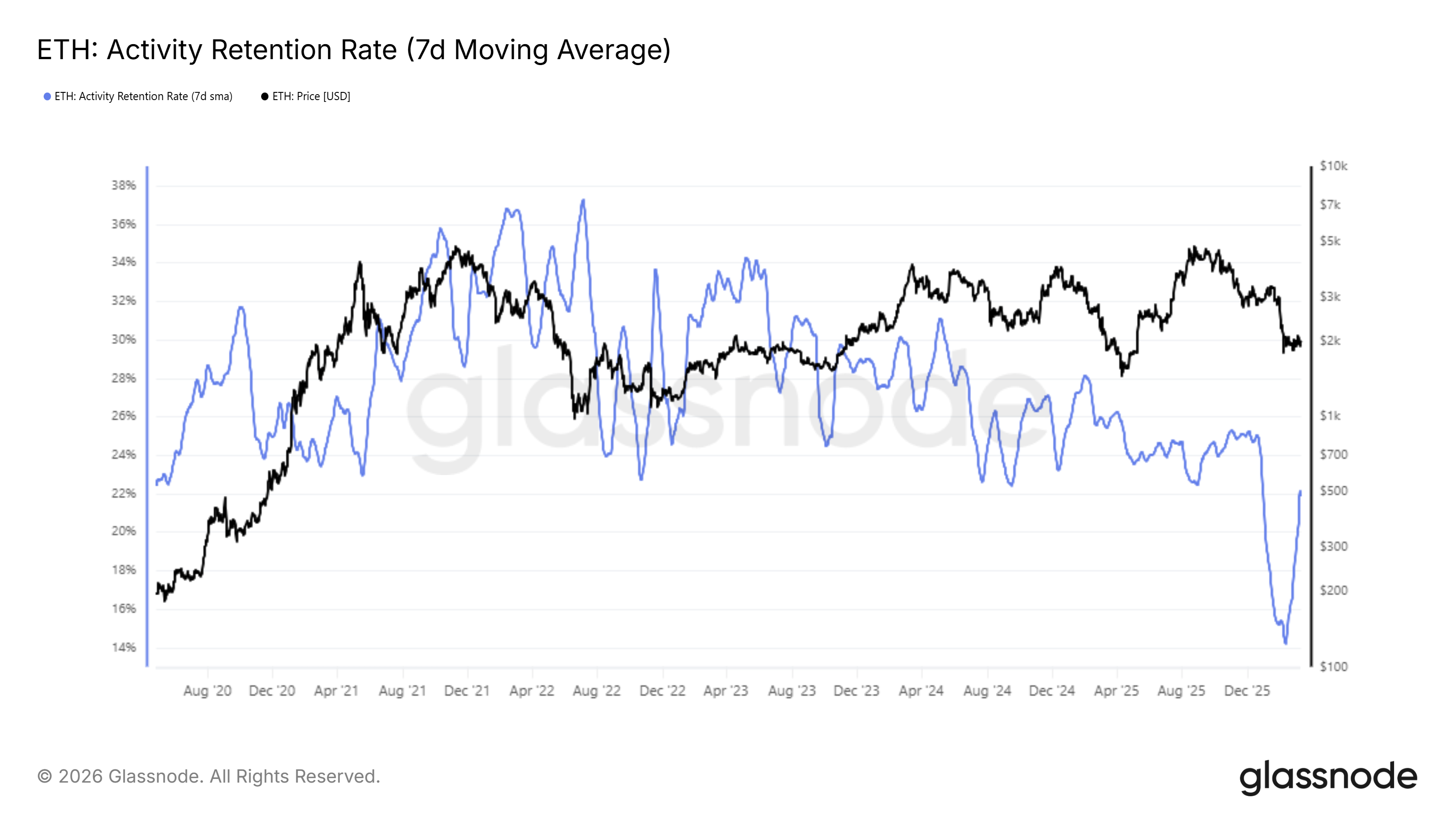
Regardless of interpretation, the gap between participation and price performance is undeniable. The 2021 cycle saw high retention amplify price momentum. This cycle’s lower retention has disconnected those two metrics, leaving ETH without the reinforcing feedback loop that previously drove sustained bull runs.
Selling Takes Over Ethereum
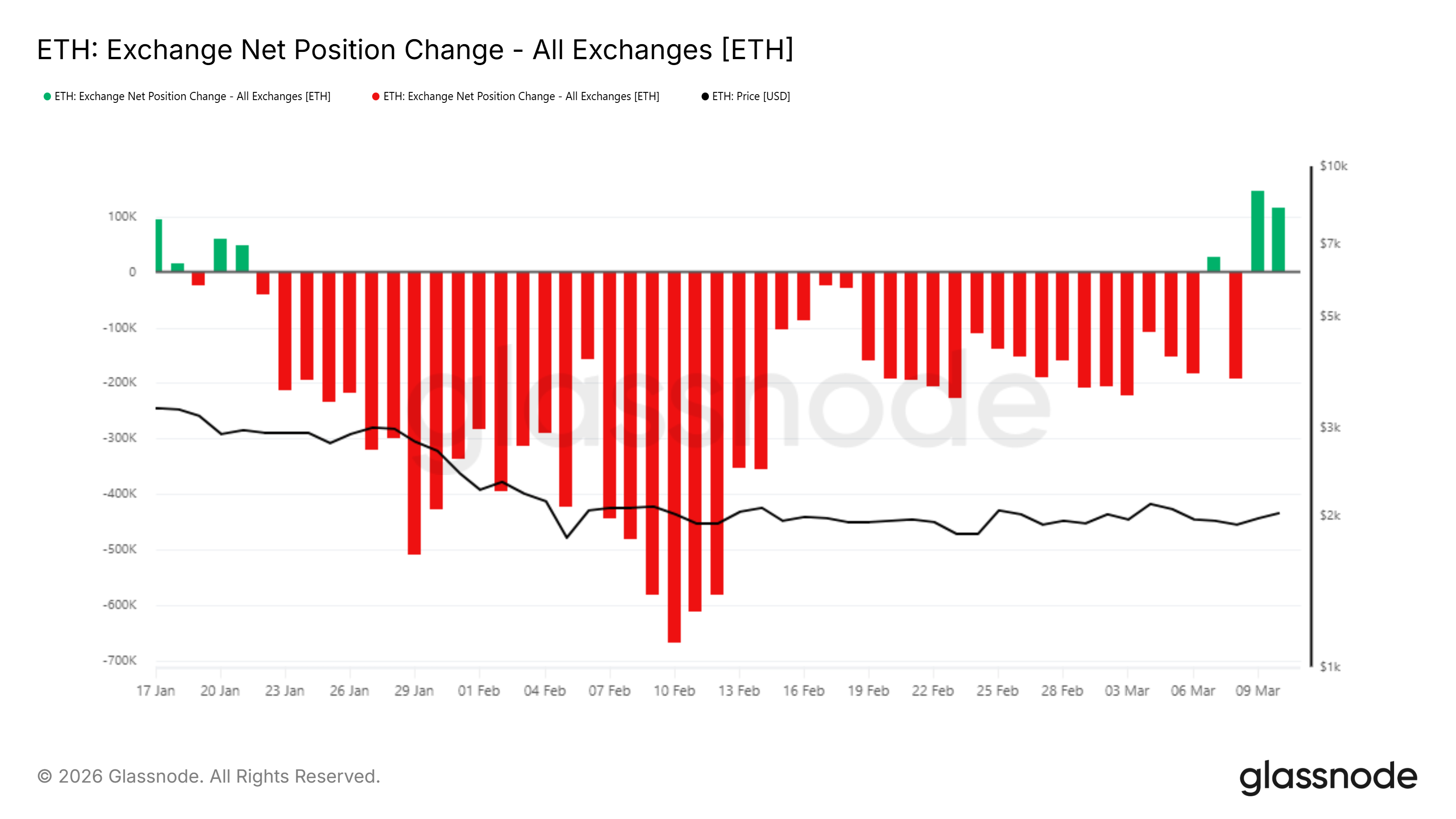
Exchange net position data shows a troubling shift beginning in early February. Buying pressure that had previously supported ETH began declining noticeably around the same time participation peaked. This week, that fading buying pressure crossed into outright selling territory.
Rising exchange inflows confirm that bearish sentiment is intensifying. More holders are moving ETH onto exchanges, a classic precursor to increased sell-side pressure. This developing trend poses a direct threat to any near-term price recovery and reinforces the cautious outlook suggested by weakening retention metrics.
ETH Price Consolidation Continues
Ethereum is trading at $2,010, pressing just below the $2,027 resistance level. Reclaiming this level as support is technically critical. A confirmed hold above $2,027 would also flip the 20-day short-term exponential moving average into a support structure, strengthening the bullish case meaningfully.
Intensifying selling pressure, however, makes a downside scenario increasingly plausible. An initial drop toward $1,928 could offer temporary relief, but losing that support would expose ETH to deeper losses at $1,838. A further breakdown toward $1,750 would confirm bearish dominance and signal a broader structural deterioration in Ethereum’s price trend.
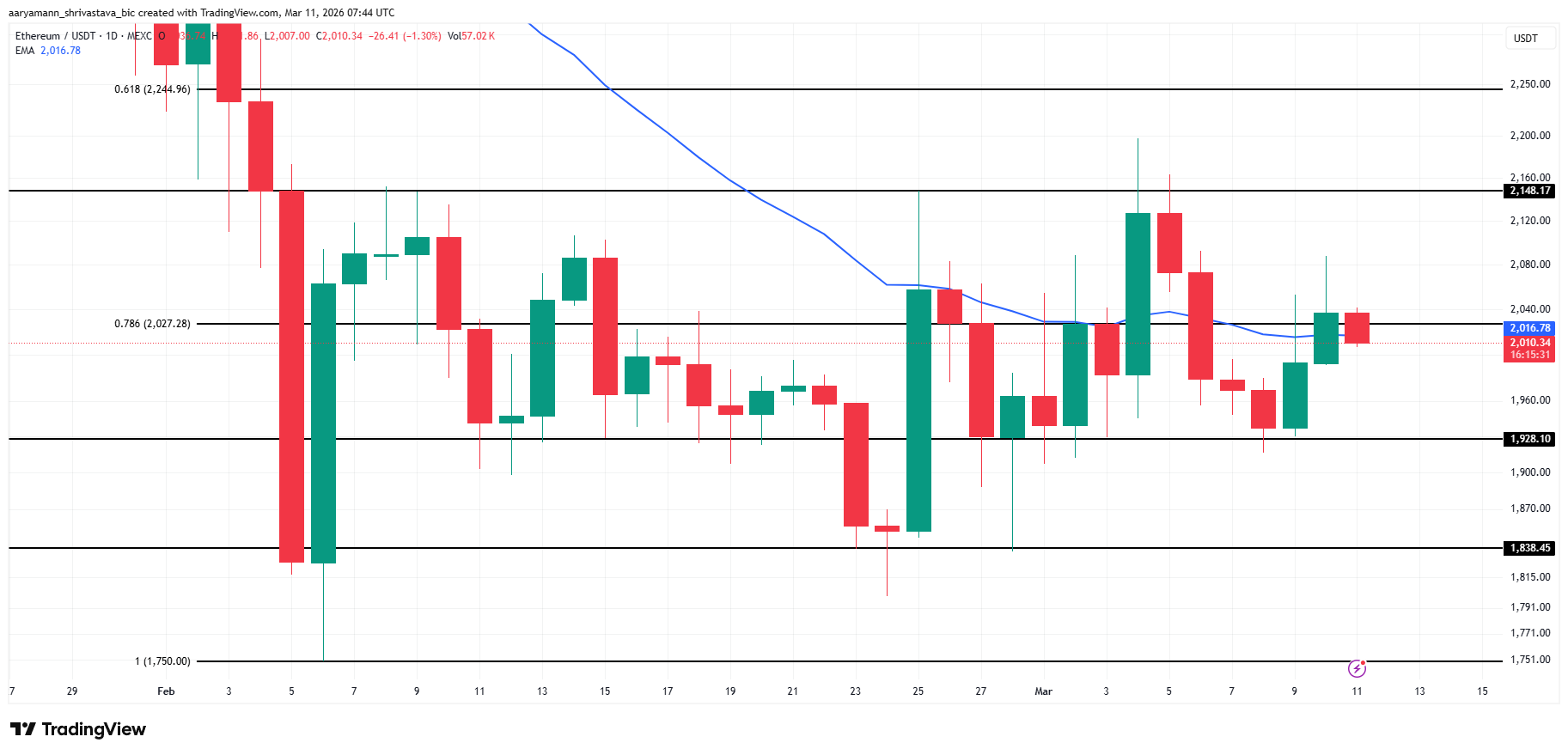
Improving broader market conditions could shift the outlook. A recovery in investor confidence would give ETH the momentum needed to push through $2,148. Clearing that barrier opens the path toward $2,244 and beyond, invalidating the current bearish thesis and confirming that Ethereum’s participation surge is finally feeding through into sustained price recovery.
The post Ethereum Participation Tops 2021 Bull Market, Yet Price Tells a Different Story appeared first on BeInCrypto.