Bitcoin fell 1.8% to around $69,400 on Thursday as crude oil surged back above $100 a barrel. The move laid bare the leading cryptocurrency’s inability to serve as a safe haven during the war in Iran.
The near-term pain is clear, but the longer-term picture is more complex. Fed policy, war-driven money printing, and sanctioned states’ growing dependence on crypto all demand attention.
Oil Shock Overwhelms Record SPR Release
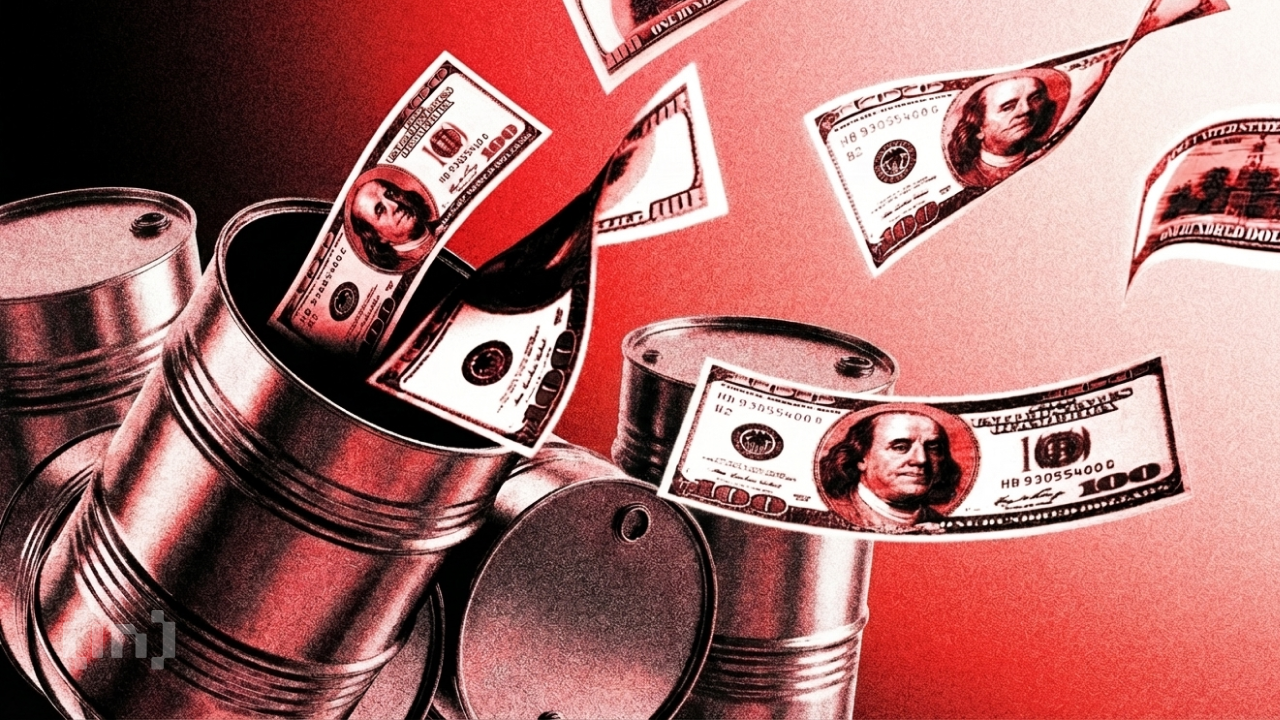
Brent crude jumped more than 9% to hit $101.59 on Thursday. Two tankers were struck in Iraqi waters, prompting Baghdad to halt oil port operations. Bahrain reported an Iranian attack on its fuel tanks. Oman evacuated vessels from its key Mina Al Fahal export terminal.
The attacks came hours after the IEA announced its largest-ever emergency reserve release of 400 million barrels. The US is contributing 172 million barrels. Markets shrugged off the move.
“Dumping barrels from emergency stockpiles is less a solution than a symbolic gesture,” said Stephen Innes at SPI Asset Management.
Polymarket now prices an 82% probability that crude hits $100 by the end of March, up 40 percentage points. The $95 contract stands at 94%. Even $110 or higher commands a probability above 60%, with more than half the market expecting triple-digit oil to persist.
Bitcoin Tracks Risk Assets, Not Gold
Bitcoin has failed to decouple from equities since the war in Iran began on February 28. It drifted sideways to lower, unable to hold the $74,000 level touched in the war’s first week.
Bitcoin is now down 47% from its October 2025 all-time high of $126,000.
The transmission mechanism is straightforward. Rising oil prices fuel inflation expectations, which push back rate cut timelines. That restricts the liquidity Bitcoin needs to rally. Traders now expect the Fed to cut rates only once this year.
For crypto, the oil move matters more than the geopolitics itself. Sustained crude above $80 hardens the re-inflation narrative and kills hopes of rate cuts. The Strait of Hormuz shutdown adds a transport-cost shock on top of the supply disruption.
ETF Flows Hint at Institutional Accumulation
Despite Bitcoin’s lackluster price action, institutional money appears to be quietly accumulating. SoSoValue data shows US spot Bitcoin ETFs logged three consecutive days of net inflows. The tally: $167 million on March 9, $250.92 million on March 10, and $115.17 million on March 11. That totals $533 million over the stretch. Cumulative net inflows have reached $55.9 billion.
The streak reverses the $348 million and $228 million single-day outflows on March 6 and 5. It suggests institutions are treating the war-driven dip as a buying opportunity.
Bloomberg ETF analyst Eric Balchunas noted on X that ETFs collectively hold 1.28 million BTC. That makes them the largest holder in the world, despite a 50% drawdown. Year-to-date flows were about to turn positive, with cumulative lifetime net inflows around $56 billion.
Still, the broader picture is sobering. Bitcoin ETFs bled roughly $4.5 billion between late January and late February, per SoSoValue. The recent inflows, while encouraging, have not yet reversed that tide.
What to Watch
Near-term: Friday’s core PCE data, expected at 0.4% month over month, could cement the hawkish Fed stance. Oil above $80 delays rate cuts. Delayed cuts starve Bitcoin of liquidity.
Longer term: Every major US war since 1990 has eventually triggered Fed easing. Deficit-funded war spending expands the dollar supply. If history repeats, the current pain could precede a monetary tailwind for risk assets.
Sanctions and crypto: The war is deepening sanctioned states’ dependence on crypto. Iran’s central bank held over $507 million in USDT before the strikes, per Elliptic. Russia’s A7A5 stablecoin moved $93.3 billion in under a year. FATF’s March 3 report found 84% of illicit crypto runs through stablecoins. That infrastructure will outlast the war.
Bitcoin remains a liquidity play, not a crisis hedge. The open question is whether war-driven money printing eventually changes that.
The post Bitcoin Slides Below $70K as Oil Tops $100 — What to Watch Next appeared first on BeInCrypto.