

XRP price may be approaching a critical moment after weeks of downside pressure. The token has remained down roughly 8% over the past 30 days, showing that the broader structure is still bearish.
However, a historical chart formation that previously triggered a rebound has appeared again. This time, the signal is accompanied by a sharp collapse in coin distribution and rising holder conviction, raising the possibility that XRP could attempt a trend reversal if key levels break.
Historical Divergence Returns as XRP Prints the Same Bounce Setup
The current setup begins with a bullish divergence on the Relative Strength Index (RSI). RSI is a momentum indicator that measures the speed and strength of price movements. When price falls, but RSI rises, it often signals that selling momentum is weakening.
Between February 11 and March 8, XRP’s price formed a lower low, while RSI formed a higher low. This is a pattern that often appears near potential trend reversal zones, assuming the fact that the broader XRP price trend still leans bearish.
Note: While this divergence pattern conceptually hints at a reversal, we would be using the word ‘rebound’ interchangeably, considering the bearish market sentiments.
Interestingly, XRP printed a nearly identical divergence earlier. Between February 12 and February 24, the price also made a lower low while RSI formed a higher low. Shortly after that signal appeared, XRP rallied about 14%, confirming the divergence’s effectiveness.
Want more token insights like this? Sign up for Editor Harsh Notariya’s Daily Crypto Newsletter here.
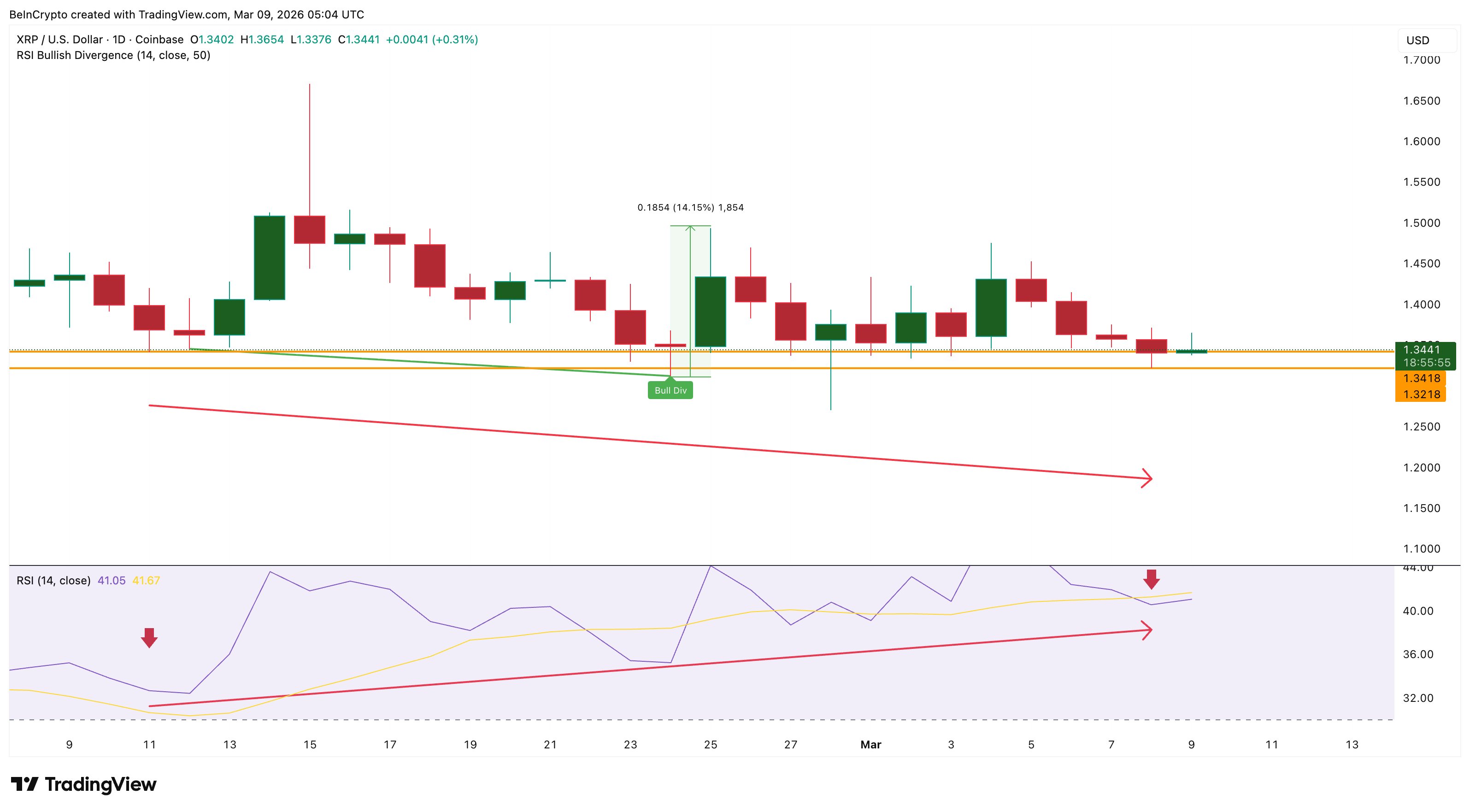
However, technical patterns alone rarely drive price moves. The strength of the current divergence becomes clearer when examining on-chain distribution activity.
XRP Distribution Activity Collapses as Selling Sentiment Fades
One of the most important supporting signals comes from the Spent Coins age band data. This metric tracks how many tokens move on-chain each day, often signaling potential distribution.
During the earlier February divergence, spent coins declined from 75.58 million XRP to nearly 43 million XRP, representing a 43% drop in distribution activity.
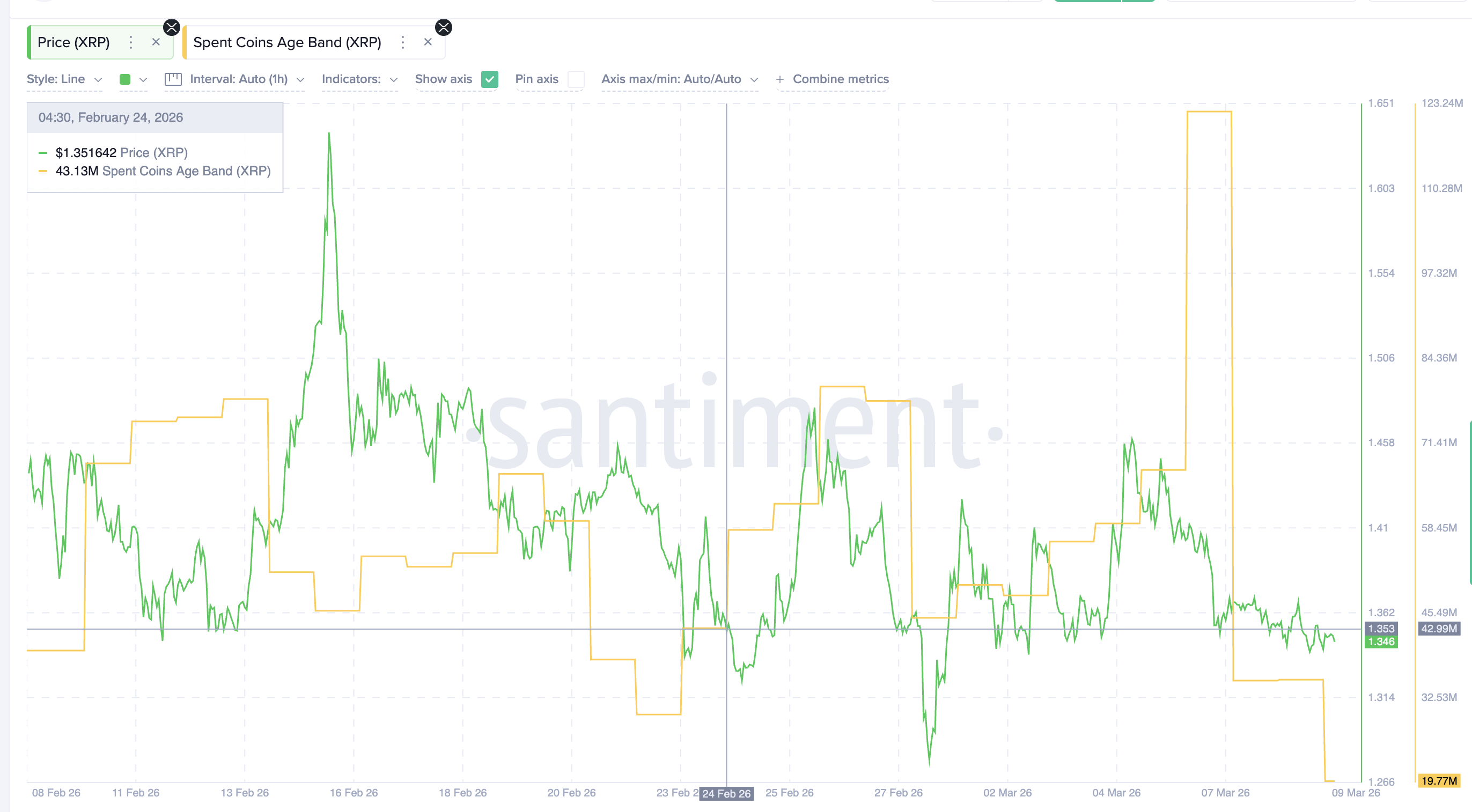
The current divergence shows a far sharper change. On March 7, spent coins surged to 122 million XRP, signaling heavy coin movement. But by March 8, the figure collapsed to 19.77 million XRP, marking an over 80% drop in distribution activity.
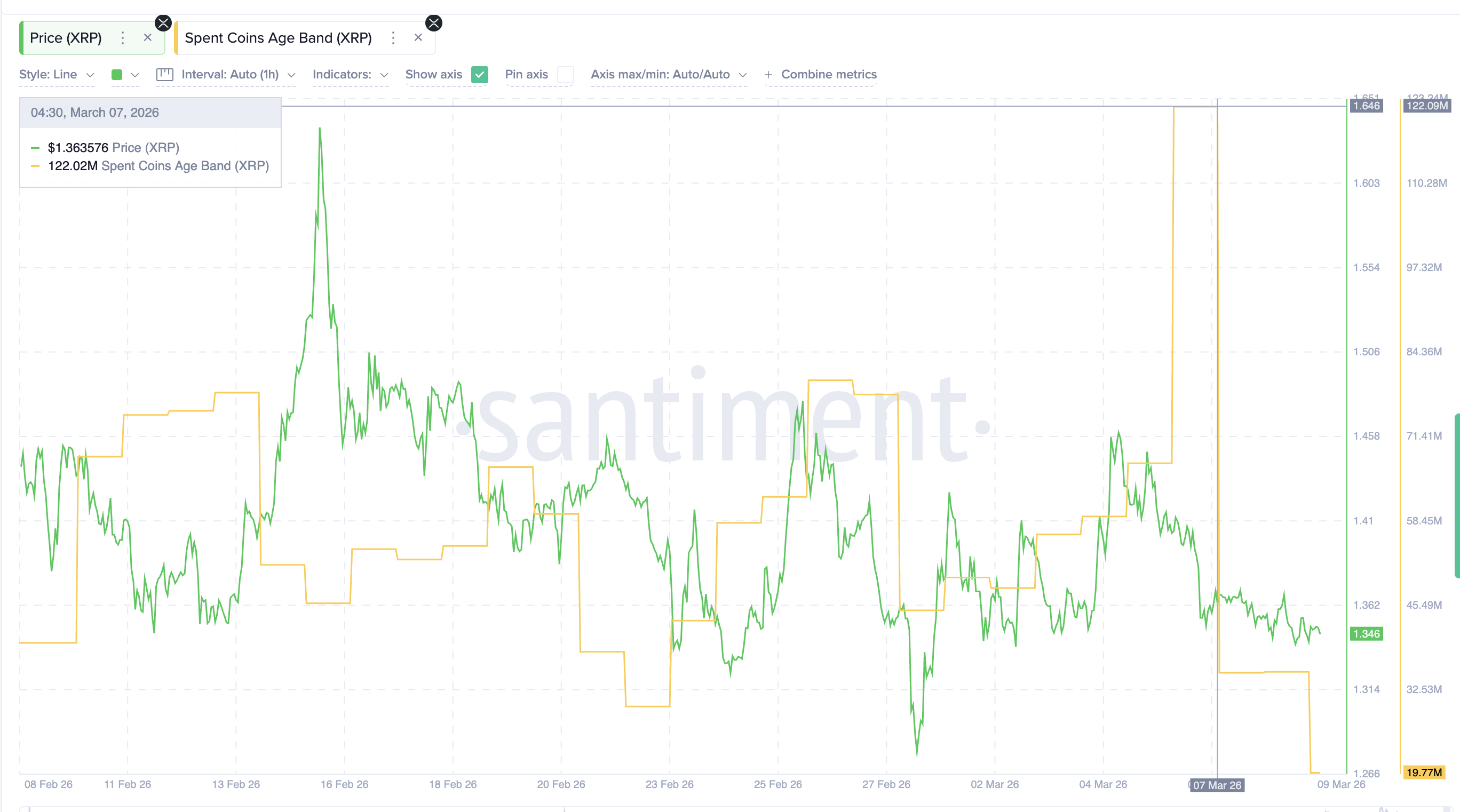
Such a steep decline in this bearish metric suggests that selling activity may have dried up rapidly after the divergence formed. With fewer coins moving on-chain, the market may be entering a period where holders prefer holding rather than distributing tokens.
That behavior becomes even more visible when looking at long-term holder accumulation.
Hodler Accumulation and Derivatives Strengthen the Reversal Setup
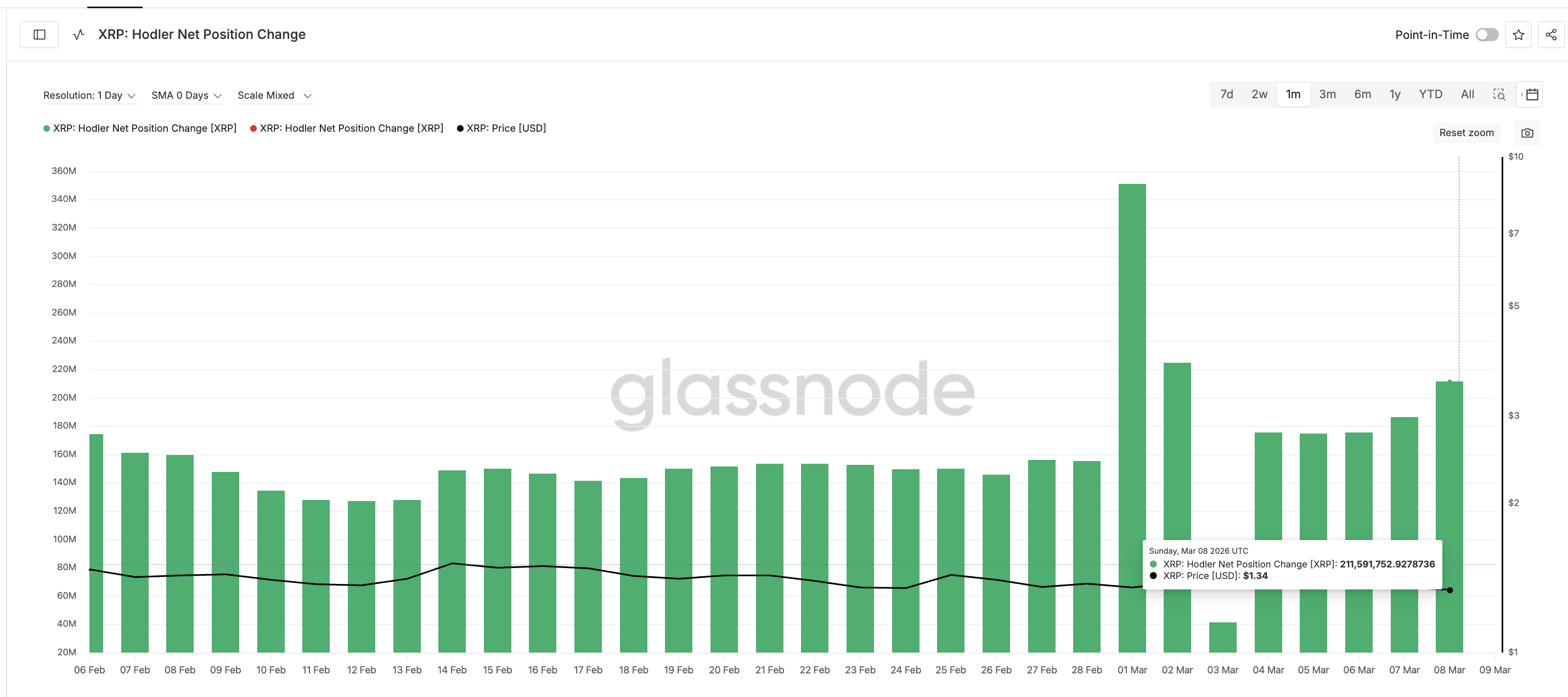
Another key indicator is Hodler Net Position Change, which tracks how much supply long-term holders accumulate or distribute over a 30-day period.
During the February divergence, this metric showed only modest growth. On February 12, the net position change stood near 126.8 million XRP, rising slightly to about 149.3 million XRP by February 24—an increase of roughly 17%.
The current divergence shows stronger conviction. By March 3, the metric had dropped sharply to around 41.4 million XRP, but it rebounded quickly to 211.6 million XRP by March 8 when the divergence appeared.
Compared with the 149 million XRP level seen during the previous rebound signal (February 14), the current figure represents roughly 42% higher accumulation, indicating stronger holder conviction behind the potential reversal setup.
But spot market behavior is only part of the story. Derivatives positioning suggests another possible catalyst.
Derivatives data shows that short positions dominate XRP’s leverage structure. Liquidation data, per the XRP/USDT pair on Binance alone, indicates that roughly $110.8 million in short leverage sits above current prices, compared with only $42.1 million in long leverage. In other words, short exposure is about 163% larger than long exposure.
More importantly, over 50% of these short liquidations cluster around the $1.39 level.
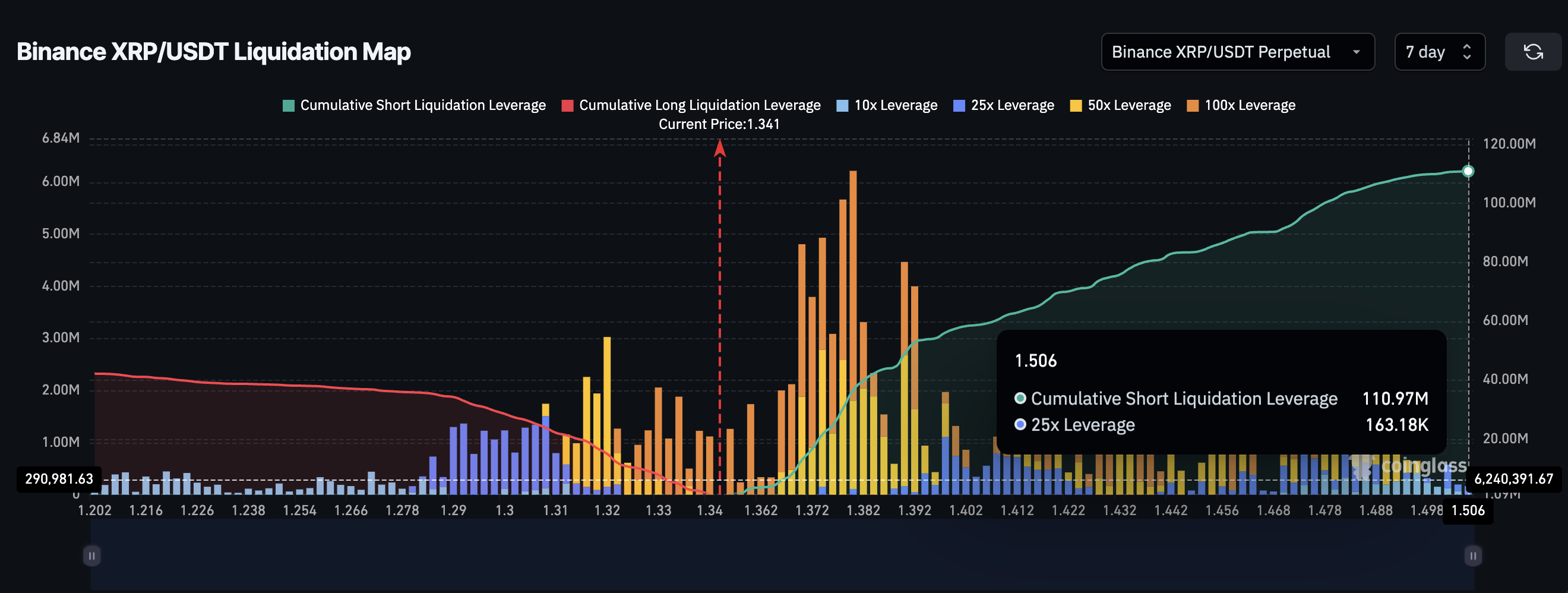
If XRP pushes toward $1.40 (a round figure), a large portion of these short positions could be forced to close. This type of forced buying, known as a short squeeze, often accelerates upward momentum.
XRP Price Levels That Could Confirm a Reversal
From a technical perspective, XRP must first overcome $1.40, the level where large clusters of short liquidations sit. A break above that zone could trigger further upside toward $1.54, representing roughly 10% upside from current levels.
If momentum strengthens further, XRP could target $1.61, marking a potential 20% rally from the current range. The 10% to 20% rally range aligns with the bullish push seen during the historical divergence pattern from earlier.
However, downside risks remain. If XRP drops below $1.32, the current divergence structure would weaken. A deeper move under $1.27 would invalidate the bullish setup entirely and reinforce the broader bearish trend.
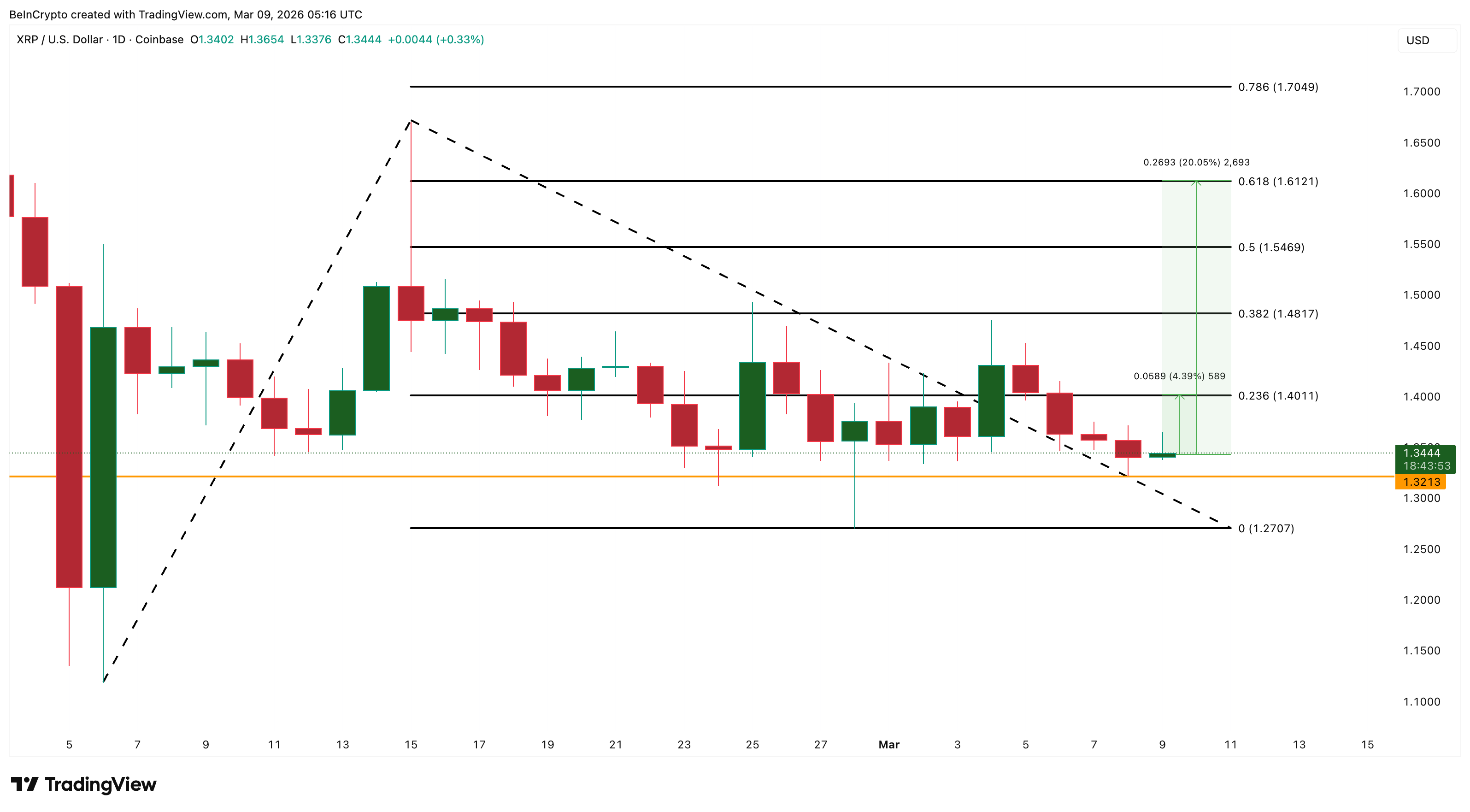
For now, XRP sits at a technical crossroads. A historical divergence has returned, distribution activity has dropped sharply, and holder accumulation has strengthened. Whether these signals translate into a true trend reversal may depend on whether buyers can push the price beyond the $1.40 trigger level.
The post Historical XRP Pattern Returns as One Bearish Metric Drops 80% — Trend Reversal Ahead? appeared first on BeInCrypto.